By K.C. Mead-Brewer
For Creature
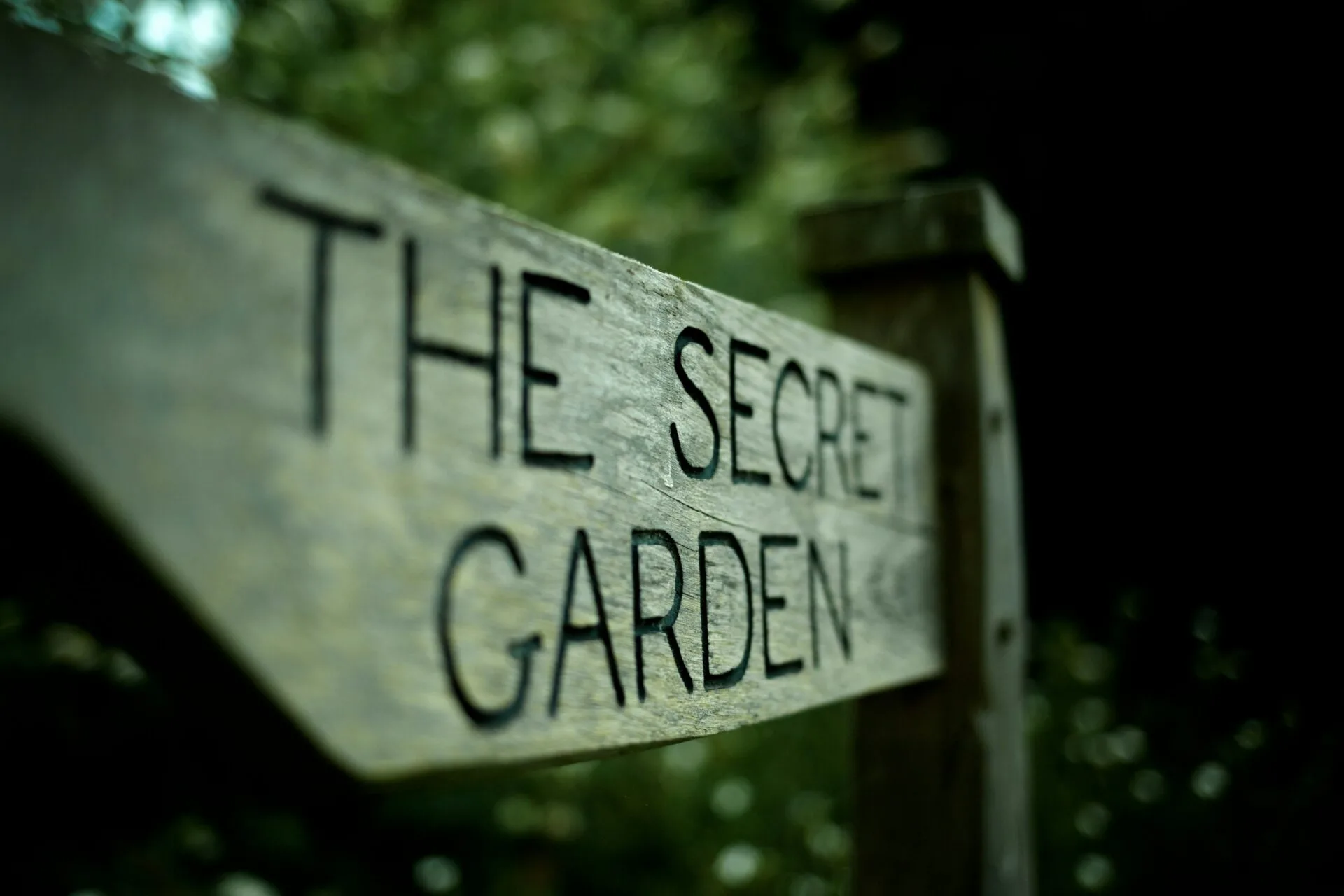
I approach all my writing projects, this one included, as if I were creating a secret, seething garden. There is an immediate crackle of energy in simply thinking the words secret garden; it’s almost an incantation. My favorite element of this incantation is the promise inherent within it: if I create this secret, seething garden, I must be prepared to share at least a corner of it with you, my reader.
The beginning of any garden is the bags-and-shovels process of mapping your space, preparing your soil, and digging countless holes. Let’s call this my story’s outline, or perhaps my rough draft. There now, clap a bit of the dirt off your hands; take a drink of water; lovely. After all this, finally!, comes the moment of thumbing seeds into soft, sour-smelling earth. Or, in my case, the planting of what I call my “ghost words” into the story.
“Ghost words” are those individual word choices that linger with you even after their line is ended. For me, these are often words like jewel or shambling or cobblestone; words I love no matter the context. I never judge a ghost word by what I imagine will linger for my reader, though; no, it must always be a word that lingers for me.
Of course, it’s a rare gardener who scatters a single handful of seeds or who pours all their seeds into a single terracotta pot. To ensure I plant enough seeds somewhat-evenly throughout my stories, I like to play a game I call “Ten Ghosts” and the one rule is this: within every page I write, I must include at least ten ghost words.
This is an early-days game that both allows me to luxuriate in the loveliness of my language and reminds me to not let things get too crowded. (More than twelve ghost words to a page begins to feel a bit purple, I’ve been told.) Ten Ghosts is also a game designed to ensure that, as my garden grows and eventually requires pruning, no patch will be without a few stubbornly beautiful tendrils who survive the shear. And there are more benefits still.
I recently played a game of Ten Ghosts with a new story I’ve got in the works, and one page gave me the following crop of ghost words: gibbering, prickle, cranberry, heirloom, hangman, clock-hand, licorice, harpsichord, butterknife, and cathedral. It’s the word harpsichord that’s most interesting to me here. The instrument in question was originally a harp, but as I looked back over the page, I realized that the word harpsichord better satisfied my Ten Ghosts this time. (There’s no clear reason for this; it’s just that the word harpsichord felt abruptly right to me in a way that harp did not.) Upon making this edit, not only was the shape of my villain’s music room changed, but the sound of the entire story changed along with it. The story isn’t meant to be lulling and beguiling as a harp, I realized; it’s meant to be sharp and sparking, spritely and hard. It’s meant to sound like a harpsichord.
And so the story began to grow. Tendrils curling upon tendrils. Flowers bending out of strange cracks in the garden wall.
A newer addition to my garden games is one called “Where’s Creature?” This grew from a wholly different (and beloved) game that I learned from fellow author Dr. Haylie Swenson. Dr. Swenson would sometimes send me photographs of spots about her home with the caption “Where’s Creature?” Creature was the name of her cat, and in every photograph, somewhere, barely visible, Creature would be lurking.
A pair of yellow eyes glinting beneath a wardrobe. The black triangle of an ear poking out from behind a bookcase. A white paw in a bar of sunlight on the stairs.
Creature died last December. She was a beautiful, irascible old dame who I earnestly adored and who loudly never returned the sentiment. To be near Creature was to be in the presence of both elegance and danger, of hearth and battle. She was a prowling angel of suspense. My fondest memory of her is when she once pummeled the ever-living daylights out of her brother-cat for no reason at all (though one can assume he knows exactly what he did). Since her death, I’ve sometimes found myself looking at story drafts and asking, “Where’s Creature?”
The inclusion of nonhuman animals has always been, and will always be, a vital part of my work. (I’ve been teased in many-a-workshop with some version of, “What is it today, K.C.? Ghosts or animals or ghost animals?”) For this reason, I don’t tend to worry about whether I have enough animals involved in a story—enough snails and robins in my garden, so to speak—and so my writing game “Where’s Creature?” bends in a different direction. Not a game of can you spot the cat but of can you hear the cat hiss? After all, no garden should be without a few thorns.
Here’s how to play: as you write and revise, ask yourself, “Where’s Creature in these pages?” And know that what you’re truly asking is, “Where else can I twist the knife? Where can I add an extra edge of tension or discomfort? Where is the pinch of the everyday unknowable?”
Sometimes these questions can be answered by a single word change; perhaps something as simple as changing mom to mother. Often, though, “Where’s Creature?” demands more complicated answers. The sort of gardening that requires gloves.
I finished a draft of a new story last week, but the ending bothered me. It was thematically and tonally sound, it had plenty of ghost words, and yet it felt flat. Uninspired. A lawn rather than a garden. As I reviewed the final pages, I decided to play a round of “Where’s Creature?”
What truly hurts about these final scenes? I asked myself. What snub or small indignity still sits like a stone in my characters’ stomachs? If their pain were a thorn, how would it prick them in this moment?
It wasn’t long before I realized how an emotionally climactic moment, when a key character decides not to forgive another, could be made significantly more painful without sacrificing the overall shape and intention of the ending. Not only would my character withhold their forgiveness; they would also refuse a gift. They would deny their friend even this small, symbolic forgiveness.
Editing with this in mind, I found it was much easier to pry open the fullness of my characters’ vulnerabilities and to show the complexity of all that has changed and grown between them. A season has ended, and so their garden is not without a touch of frost and death, but it remains a garden all the same.
I had the opportunity this summer to walk through a lovely garden with Creature’s Dr. Swenson—The Cloisters in Manhattan; you really must visit, they are remarkable—and there I learned the name of something I’d long admired: an espaliered tree. Perhaps you already know the term (as Dr. Swenson did), but for those like myself who do not: an espaliered tree is one that has been pruned and tied so that its branches grow into a controlled, geometric pattern. There are agricultural benefits to this, I’m sure, but all I could think as I looked upon The Cloisters’ espaliered pear trees was that their gardeners had turned a tree into a sculpture. Immediately, I wondered how this might affect the secret, seething gardens of my stories; where and how could I enfold the spirit of espaliered art into my work? How could I more artfully pair a feeling of wilderness with a couture silhouette? How could I take some of the (lovingly) shaggier, asymmetrical parts of my work and make them more orderly without offending their soul and strangeness?
It was as I considered titles for this essay that I realized the rule for this new espaliered garden game: never highlight the ties on your tree branches when it’s the tree’s new shape and pattern that you want understood. In other words, do not overexplain yourself. Do not quibble or qualify or apologize in your art. (I have cut at least one hundred words of hemming and hawing from this essay.) Trust that your readers will decide for themselves who and what is The Eleventh Ghost in your work. Trust that your readers will follow you into a world where a story may become a garden and a tree may become a sculpture. Trust that they will appreciate how a craft essay may start to resemble a eulogy for a friend’s dead cat.
Trust that, especially in these dark and frightening times, I will always treasure the opportunity to sit a moment and admire the secret garden you’ve grown.