By Christian Emecheta
What does it cost to be a writer? I do not mean money, though that conversation will come. I mean the quieter currencies: the hours stolen from sleep, the relationships tested by distraction, the constant negotiation between the person you are and the person who appears on the page. At thirty years old, writing from Lagos, Nigeria, I have spent nearly a decade trying to answer this question. The answer changes with every story I finish, every rejection I receive, and every small victory that reminds me why I chose this path. Writing is not merely a profession or a hobby. It is a way of being in the world, a lens through which experience becomes material and silence becomes meaning.
This essay is my attempt to share what I have learned about the craft and business of writing, particularly within the territories of horror, dark fiction, and speculative literature. These are genres that have shaped my imagination and challenged my assumptions about what stories can do. But more than offering tips or techniques, I want to offer something honest: a personal perspective on what it means to build a writing life in a context where such lives are rarely straightforward.
Your Decision to Write
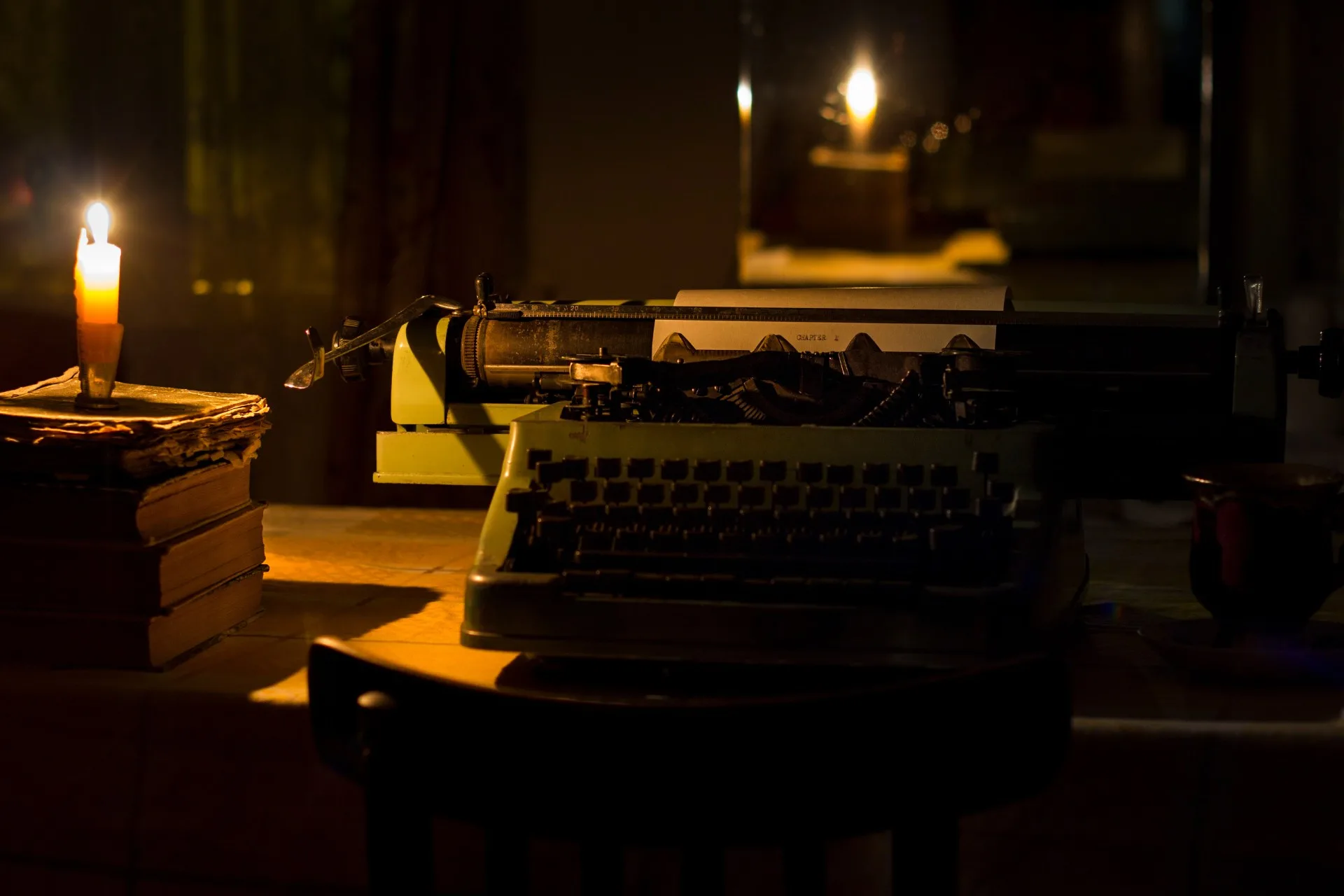
Every writer has an origin story, though most are less dramatic than we might wish. Mine began with power outages. Growing up in Nigeria, electricity was unreliable, and during those dark hours, my mother would tell stories. Some were folktales passed down through generations. Others were mere imaginations, created on the spot to keep restless children quiet. I learned early that stories were not luxuries but necessities. They filled the darkness with something other than anxiety.
When I decided to write seriously, I faced the question every Nigerian creative confronts: is this a real career? Our society values stability, and writing offers little of it. My family supported my education, expecting it would lead to law or medicine or engineering. When I announced my intention to write fiction, the dread was instructive. It was not disapproval exactly, but a quiet confusion, as if I had declared an intention to become a dog.
I share this because every writer must reckon with their context. Your journey will be shaped by where you come from, what resources you have access to, and what your community expects. The decision to write is not made once. It is remade every morning when you sit before an empty page, knowing that the world offers easier paths.
The Craft of Dark Fiction
I gravitated toward horror and speculative fiction because these genres allow writers to ask dangerous questions. What are we afraid of, and why? What happens when the familiar becomes strange? In a country where daily life already contains elements of the surreal—where fuel scarcity can change your week, where negligence operates like a leash—speculative fiction feels less like escape and more like documentation.
The first lesson I learned about dark fiction is that restraint is more powerful than excess. Young writers often believe that horror requires gore, that dark fiction demands shock. This is a misunderstanding. The most effective horror operates through implication. A door left slightly open. A sound that should not exist. A memory that feels wrong without being identifiable. These small disturbances create more lasting unease than any explicit violence.
Consider the difference between showing a monster and suggesting one. When you describe every detail of a creature, you limit it to your imagination. When you leave gaps, the reader’s mind fills them with their own fears. This is why the best horror is collaborative. The writer provides the framework; the reader provides the fright.
Another crucial element is pacing. Fear is built through rhythm. Short sentences create tension. They force the reader forward. They mimic the quickening heartbeat of someone approaching danger. Longer sentences, by contrast, can lull the reader into false security before a sudden break disrupts everything. Learning to control this rhythm is essential. Read your work aloud. Listen for where the breath hauls, where the flow stutters. These are your pressure points.
Finding Your Voice in a Crowded Room
Most writing guides will tell you to find your voice, but few explain what this means in practical terms. Your voice is not a style you adopt; it is the residue of everything you have read, experienced, and struggled to articulate. It emerges through practice, through writing badly and then writing less badly, through imitation and eventual departure from your influences.
For writers working in genre fiction from non-Western contexts, voice carries additional weight. We write in conversation with traditions that did not always include us. Horror as a genre has been shaped largely by European and American anxieties: the Gothic castle, the haunted house, the alien invasion. Our task is not to reject these traditions but to expand them. What does horror look like when the haunted house is a compound in Benin City? What monsters emerge from our own mythologies, our own histories of colonialism and resistance?
I found my voice by writing about what I knew: my account of life in Lagos, the weight of family expectations, the peculiar loneliness of pursuing art in a society that measures success in material terms, and filtering it through the lens of the strange. My horror stories are set in places I recognize. My monsters speak languages I understand. This grounding makes the supernatural elements more effective because they express something real.
The Business of Writing
Craft is only half the equation. To sustain a writing life, you must understand the business. This is where many writers, myself included, struggle. We want to believe that good work speaks for itself, that if we write brilliantly, recognition will follow. This is a comforting lie. The publishing industry is a market, and markets require strategy.
Start by understanding where your work fits. Research magazines, journals, and publishers that specialize in your genre. Read their recent publications. Note their preferences in style, length, and theme. A story rejected by one venue may be exactly what another is seeking. Rejection is not a judgment of your worth; it is information about fit.
Build relationships within the writing community. Attend workshops when possible. Engage on social media platforms where writers and editors gather. These connections are not merely transactional; they are sources of support, feedback, and opportunity. The writing life can be isolating, particularly for those of us working outside major publishing centers. Community counters that isolation.
Be patient with your career but impatient with your craft. Improvement should be urgent; success often is not. Writers who endure are those who continue working regardless of external validation. They submit, get rejected, revise, and submit again. They treat rejection as evidence of effort rather than failure.
The Pain of Rejection and How to Carry It
No essay on writing would be complete without addressing rejection. I have received hundreds of rejections. Some were form letters, impersonal and brief. Others offered feedback that stung because it was accurate. Each one helped me in restructuring and rebuilding.
The trick, if there is one, is to separate your identity from your work. A rejected story is not a rejected self. This separation is difficult because writing feels personal. We pour ourselves into our words, and when those words are dismissed, we feel dismissed. But the separation is necessary for survival. The story can be improved, rethought, or set aside. The self must remain intact enough to write the next one.
I keep a file of rejections. Not to torture myself, but to remind myself that persistence is part of the process. Every published writer has a similar file, though many do not speak of it. The difference between those who make it and those who do not is often simply the willingness to continue.
Why We Write Dark Stories
People sometimes ask why I write horror, as if choosing darkness requires justification. The question assumes that pleasant stories are neutral and dark ones are aberrations. I disagree. Dark fiction is honest fiction. It acknowledges that life contains suffering, that fear is a universal experience, that we are all, in some way, haunted.
Horror and speculative fiction allow us to examine what polite realism often avoids. They give shape to anxieties we struggle to name. They create spaces where readers confront their fears safely, emerging perhaps with greater understanding. This is not escapism; it is engagement. The monster on the page is always, in some sense, a monster we recognize.
The Long Road
At thirty, I am still early in my journey. I have published stories, received recognition, and built a small readership. I have also doubted myself, considered quitting, and wondered whether the sacrifices were worth it. These contradictions do not cancel each other out. They coexist, as they do in every writing life.
If you are reading this as someone considering the writing path, know that it will be harder than you expect and more rewarding than you can imagine. The craft will humble you. The business will frustrate you. But on the nights when the words come right, when a sentence captures something true, when a reader tells you that your story stayed with them, those moments justify everything.
Begin with a sentence that seems simple. Then pull a complex web of meaning from beneath it. Let that web work slowly, seeping into whoever reads it. That is the writing life: patient, difficult, and ultimately, if you persist, profound.