by Brook Bhagat
Editor’s note: Content warning for both pet and parental death. This is a powerful essay. We care about your mental health; please read responsibly.
Zoot, once a stout, fierce tomcat, was less than six pounds when he died. My teenage son and I took turns changing his diaper. Every week, we bathed him in the bathroom sink. The night it happened, I was still holding him in the towel, sitting on the couch. My tear fell in his eye, frozen open. When he didn’t blink, I knew he was gone. Later, I wrote a poem called “The Last Bath.”
I wrote four poems and two stories when Grandma Muriel died. “The Edge of the Woods” imagines her between worlds, hesitant to cross over. A guide asks her what kind of artist she is. All kinds, she says. A real artist uses everything she can get her hands on, doesn’t she? She was a poet, a novelist, a painter, a musician. Her love and her example made me a writer, too. But I didn’t think I could write about my dad.
My father had been diagnosed with bile duct cancer six months before and was on hospice care at home. He was gentle, funny, and brave, and he loved us madly. Throughout the spring and summer, between my full-time job teaching at the college and my family of five, I made the 25-mile drive up into the mountains to see him once a week, more often as it got worse. I had never lived in a world without him in it. It was just too big. Nothing I could write would be adequate, so I stopped writing at all.
I did paint. The Light Ekphrastic accepted three of my paintings and paired me with a poet. He sent me three pieces; my job was to choose one and illustrate it. “Unhitched” described a neighborhood gone—the funny aunts, a gate, a street—and nothing left in the end, “everything worn away except/ the lock on the room we would set fires in.”
The image came immediately: a lime green house falling through space, ropes on the four corners of the roof fluttering as it plummets. The front door hangs open, the void outside meeting the void inside. Sidewalk squares crumble into the abyss. For me, it was about losing my dad, the feeling of my childhood disappearing forever. The heavy, heavy loss, ropes broken. Unraveling, like everything else. I called it “Freefall.”
It was the most miserable painting experience of my life. I like to paint big canvases with my fingers, round shapes and Impressionist people—not tiny doors and windows whose perspective has to be just right. I hadn’t had to make visual art for a deadline in decades. For weeks, I stayed up after everyone else had gone to bed, alone in the living room with my watercolors, breaking down.
The painting was published. My mother and Aunt Diane, who had come to help her, loved it, but I didn’t show it to my father; it was nothing but pain. During our visits, he wanted to just be together and talk about normal things—the kids, my students. Whenever something funny happened during the week, I’d save it to tell Dad on the weekend. He wanted to laugh together, sit out on the deck in the sun and look at the aspens together. Just be together.
After the painting, I heard about a fiction contest from the library district that had supported me when my book came out and offered other events for authors. This was a local contest, which meant less competition. If I could place in it, that would help keep me on their radar. I went through the guidelines. All entries had to begin with “The train screeched to a halt.” I love trains.
My mother tongue is poetry; fiction is always more like work, but I look for reasons to keep my chops up. I could make it science fiction, my other mother tongue. I guessed that many of the competing train stories would be historical fiction, so this could make mine stand out.
My husband is from India, and Star Trek is the common religion we’ve raised our children in. An image came, a train coming out of a wormhole. I had a second sentence and a third: “Behind it, the vortex crackled and swirled with electric blue light, spiraling the rails still inside it for almost a minute. Then it shrank to a pinprick and disappeared. This was it.”
If I made it time travel, I could repeat the first sentence and then play with the next few lines like a poet, changing them a little each time—the tracks could spiral, twist, and corkscrew. Some readers wouldn’t notice; others would flip back and forth and see what I did there. I could repeat certain other details of the story each time, giving the reader déjà vu.
For the main character, a young woman in the train with a backpack on her lap, like me in India more than twenty years ago. The trains there are a subculture all their own, and an Indian setting could also make my story different. Having lived there, I could write cultural details authentically, and I’d check them with the man, too.
Now, what could my MC want so badly she’d be ready to travel back in time? That part was easy. She was looking for her father.
I wasn’t sure where to go from there, but I have a good writer friend who gives me feedback straight, never sugar-coating anything. I called her up.
The problem with sci-fi is that everything has already been done, I said. In time travel stories, everyone goes back and changes the past. I have one idea, but nobody will like it.
My friend nudged me. Well, I said, she could go back in time, find her dad, ask him to quit smoking, and he doesn’t do it. I laughed. What a drag, right? It’s not even a story. Nobody wants to see that.
I don’t know, she said. I think it’s interesting.
Like I said, she’s not one to pull punches. I decided to give it a try.
Dad did chemotherapy only once. It made him exhausted, sick in bed for days afterward. When there was no visible improvement, he said he wouldn’t do it again. He didn’t want to spend the time he had left that way. He had gone along with some of the natural remedies my husband and I proposed, but not all of them.
I have thyroid cancer which has been improving for years from natural medicine. When Dad was diagnosed, we suggested a thousand supplements, meditations, and lifestyle changes, and he tried. He took all the vitamins we recommended. He ate less sugar, but didn’t cut it out. He ate less meat, but he didn’t become a vegetarian. He couldn’t do more than two days of the baking soda-and-molasses protocol because of the taste.
Around this time, one of my students wrote a story about her mother’s struggle with breast cancer. In it, the mom is a walking skeleton when she leaves for a trip to a natural medicine and rehabilitation center in Mexico; a month later, she comes back tan and healthy, every trace of the disease eradicated. I talked to the student, researched the facility, and proposed the idea to my parents.
Their first problem was the cost. I found other places, all beautiful locations, all-inclusive, where patients and guests eat leafy greens the staff promises taste good and do numerous therapies and meditations. My mother told me he wouldn’t go for it. We can do all those things at home, Dad said. We’re still doing yoga in the mornings.
If you want to change, it helps to be somewhere else, I told him, away from all the old habits and routines. It was bile duct cancer; diet was a big part of it. My dad was not me, though, not the mother of a teenager and a toddler. Not a meditator, if that matters. He was 74 years old, a retired small business owner used to a life on his own terms. He didn’t really want to change, not that much.
My main character, Lavender, goes back in time four times. The first time, it’s 1970. Her father is rattled by the things she knows about him but he doesn’t believe she’s from the future. The scene ends with him relighting his bidi, which had gone out.
The second time, it’s 1980, and Lavender succeeds in convincing him. He’s deeply moved and promises to quit smoking.
In 1990, he has tried and failed to quit. In 2000, he confesses that he just can’t do it. Lavender is angry, incredulous. She feels betrayed and abandoned. How can he just give up when he has proof that it’s going to kill him? Scenes of his death and her mother’s grief haunt her. If he loves them, how can he not try harder to stay with them?
All this anger was mine. Dad couldn’t try just one more round of chemo, for us, if not for himself? He couldn’t go on a goddamn vacation if it meant eating vegetables? He loved us, but not enough to drink baking soda and molasses? I didn’t like the taste either, but I drank it somehow because it was cancer and I had to get better no matter what.
I couldn’t tell him these things. I couldn’t waste our numbered moments on drama that likely wouldn’t help anyhow. My mother had rarely pushed him for anything in their 50-plus years together. It’s his decision, she said, and we have to respect that.
Between trips to see him, I brought the story to my writers’ group and sent it to my writer friend. The group helped me with the sci-fi math (how old was she when he died? how old was he when she was born?) and other details. Good bones, my friend said. But the emotional core of the story isn’t there yet. Maybe some flashbacks to show their relationship?
I took her advice. In one flashback, Lavender’s dog has been hit by an autorickshaw. Her father tells her it’s too late; just be with him, he says. He is in so much pain, but his eyes are full of love for you.
Lavender gets angry and insists on trying to make it to the animal hospital. The dog dies on the way, in the taxi.
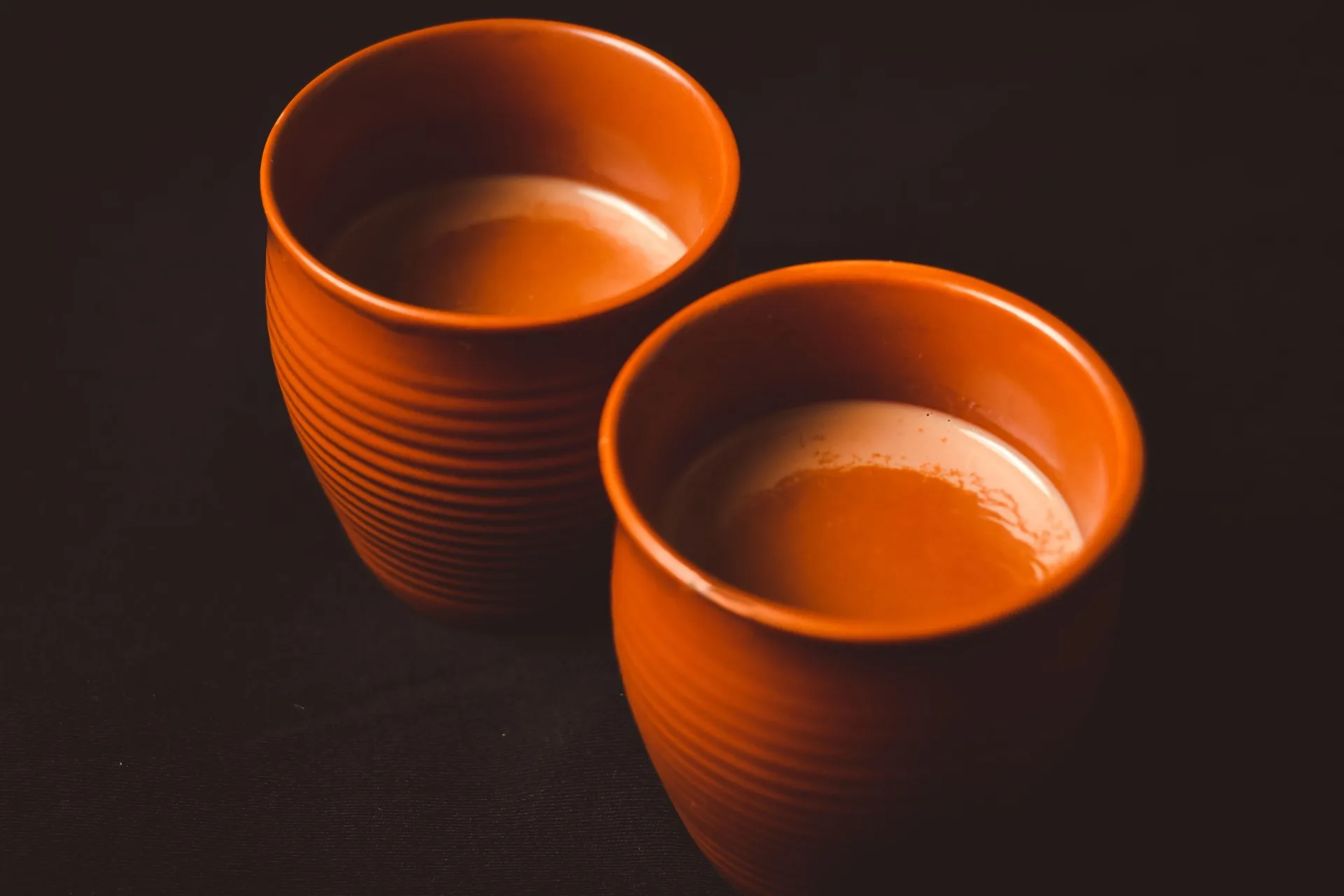
In the next flashback, her father is making chai with extra milk and sugar, as they do in India for children. That makes it magic chai, he says, spinning her around in his arms.
The taxi flashback gave me a way to show Lavender’s growth. In 2000, after all her anger comes out, she breaks down, feeling helpless, like a failure. Her father asks how much time she has left before she has to be back on the train: 20 minutes. It was not all for nothing, then, he says, not if they can stop crying.
He plays “Imagine” by the Beatles and makes magic chai. They clink glasses. Lavender stops trying to save him and accepts him for the human being he is, weaknesses and all. She is able to just be with him and enjoy the moment before it’s gone.
In the end, that’s all I could do, too.
To the last day of his life, my father was full of love. On the day he died, he was in so much pain, but still he smiled again and again at each of us on the bed. It was not a blind smile; it was the opposite of blindness. He really saw me, with love and joy, as he has seen me my whole life.
That’s all we have. That’s what it means: that’s the magic. I smiled back.
Epilogue
“Magic Chai” tied for second place in the contest. Read it here.