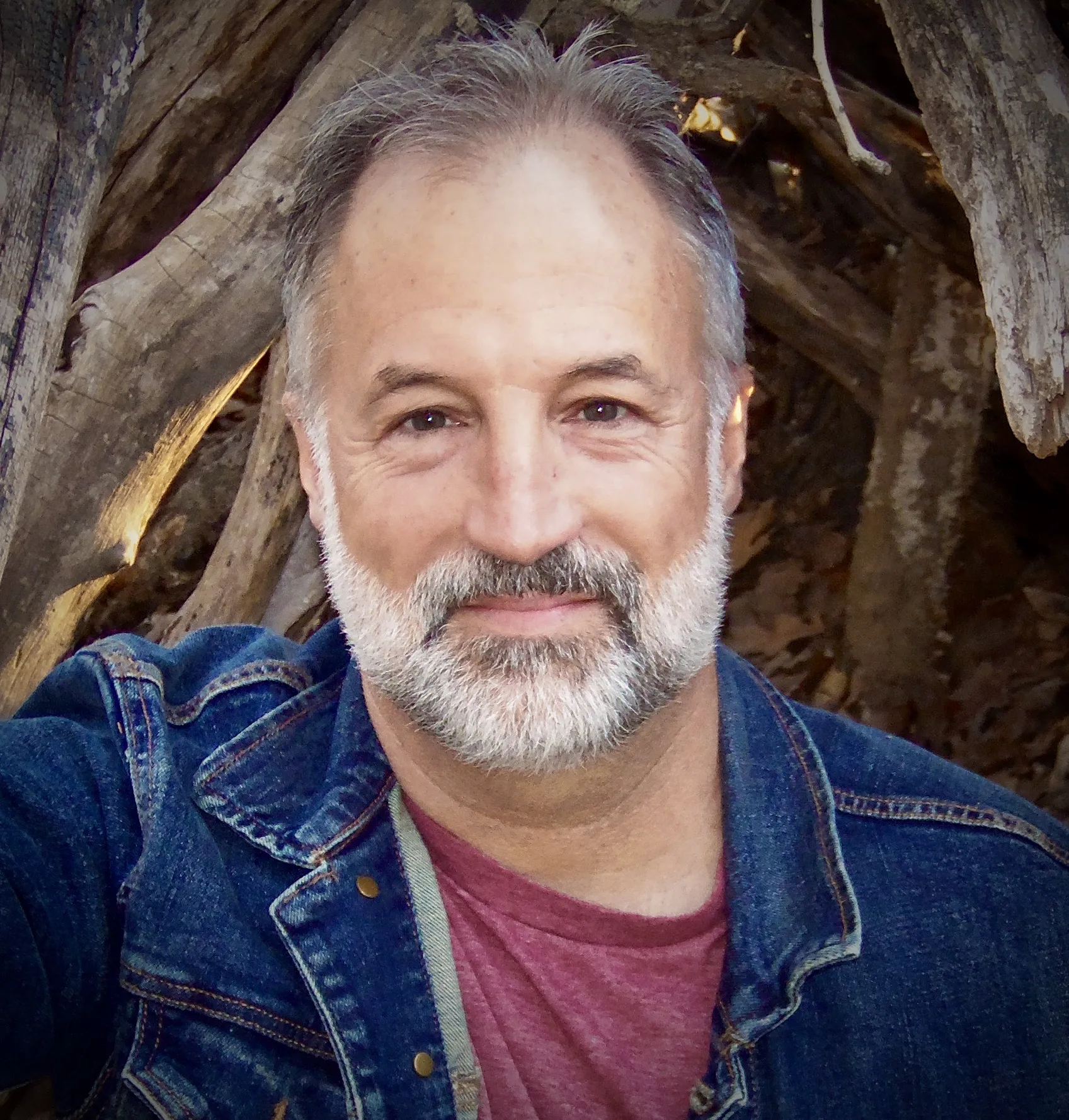
by Mark Matthews
“Monsters are real, and ghosts are real too. They live inside us, and sometimes, they win.” —The Shining, Stephen King
Horror is the genre where writers take the darkest bits of human nature, mix them in a cauldron, and let them stew until they boil and bubble. It’s the arena where characters often battle against intense trauma, mental illness, grief, and other parts of our complicated human psyche. Monsters that mean us harm do exist in the real world and in the lives of everyone; we just can’t always see them. Horror makes sure we do, often with those monsters as metaphors for mental health stressors.
Horror can stigmatize elements of human trauma and mental illness through false depictions and negative stereotypes. How common are scenes where we discover a character is taking psychotropic medications meant to indicate a character flaw? Oh no! They take Paxil! They must secretly be a monster. Even the oft-used phrase “psychotic killer” is a misnomer, for those who experience psychosis are not usually as dangerous as depicted. Horror feeds us these negative stereotypes so often they’ve created fictional tropes that lead to real-life misconceptions.
But when written with awareness and empathy, horror is in a unique position to portray the mental health stressors we face with stark honesty, unmatched accuracy, and incredible compassion.
As a horror writer and a licensed professional counselor of 25 years, it’s been a pleasure to serve as co-chair for the Horror Writers Association’s Mental Health Initiative. One goal of the initiative is to address mental health stigma—the false and negative perception that those with a mental health diagnosis are somehow weak and damaged, rather than resilient and strong. Receiving support from a mental health professional should be treated no differently than seeing a dentist, yet too often those who seek therapy are seen as deeply flawed when they are actually self-aware and courageous.
Another way mental health and horror are aligned is that horror writers themselves are frequently stigmatized as being dark and dangerous versus kind, empathetic, and understanding.
Someone you met may first discover with delight that you’re a writer, only to betray an inevitable face twitch when you tell them you write horror. That delight turns to dread. Suddenly you’re different in their eyes, not the good kind of different, but a scary stay away kind of different.
As a therapist, I commonly wait to share that I write horror, if I tell others in my professional life at all. I certainly don’t share with clients readily, but I hold back even with peers until they’ve learned who I am, how I am, and what I believe in. It’s hard to say, “I don’t write darkness, I write candles,” without an hour over coffee to explain what I mean: that I write about resiliency and the wars we wage for the ones we love because life demands it. I’d like to explain that, no, I am not trying to scare you by writing horror; the truth is, I write horror because I am the one who is scared —scared of how to get by in this world. Horror helps me, and so often, it sees me.
As Joe Hill aptly noted, “Horror is not about extreme sadism, it’s about extreme empathy.” Though this is not how it’s understood.
What people do understand, and what does give me “street cred” for having danced with the heart of darkness, is that I’m a person with lived experience in addiction.
I used to drink from morning to night, and consumed every drug I could get my hands on. The result was multiple hospitalizations with bloody organs and spiritual despair. I found myself wishing for death, but couldn’t seem to die—so when it seemed my only option, I dragged myself into a treatment center and have been sober for 30+ years.
When working with clients suffering with their own addictions now, this experience mostly brings a positive shift in perspective. After clients learn their therapist is in recovery from addiction, they are quicker to believe this seemingly straitlaced counselor can understand the despair they’ve felt. There’s an assumption that a therapist in their own recovery understands the ache, the itch, the cravings, and the lifestyle—and the fact they are now sober means there’s hope.
Living through horror means hope, but this doesn’t always translate to the public perception of writing horror. The reaction is rarely My god, you’ve been in touch with characters who have experienced such hell, maybe you can understand my horror? Instead, there is often this prejudice that you are the cause of horror.
With the recent rising popularity of horror, the number of studies examining the mental health benefits of the genre are growing. Studies are finding that horror fans are more psychologically resilient.1 That when we face fears in a safe space, often in a shared experience, there is a reclaiming of the narrative through emotional processing and catharsis.2
We are not unwell. We are aware. We are brave. We are resilient.
Dr. Coltan Scrivner is one of the leading psychologists proposing that horror has mental health benefits. He explains that horror media can provide “immediate anxiety relief through mechanisms like distraction, perceived control, and physiological regulation.” Scrivner proposes that “repeated exposure to fear-inducing content in horror can foster long-term psychological benefits by enhancing emotional clarity, challenging emotional reasoning, increasing tolerance of somatic experiences, and promoting cognitive reappraisal.”3
Of course, many of us know this to be true through years of observation. We don’t need a scientific study to know which way the wind blows. Despite the misperceptions, horror can provide comfort, and horror writers themselves, in my experience, have the finest hearts around.
When I mention to folks that I go to StokerCon, the yearly convention of the Horror Writers Association, there is an assumption that we are a bunch of scowling dark souls walking under black clouds who revel in the suffering of others. From this position, it’s hard to explain how StokerCon and similar conventions are full of kindness and smiles and a compassion for the human spirit. I believe this compassion comes from understanding what dark tribulations many humans go through. And when horror writers are at their best, this compassion extends to those who suffer with mental health stressors. The act of writing horror can serve to increase that human connection.
Empathy is a key ingredient to supporting the mental health of our loved ones, and also one of the most essential skills for a writer. Putting ourselves inside our characters’ shoes, skull, and spirit begins the deep relationship we have with our characters and their journey.
Isn’t that what supporting others with their mental health stressors is? Being willing to walk with someone on their journey in a compassionate way. Getting inside what their lived experience must be (rather than judging it from afar) and not leaving them alone in their darkness.
These are not easy journeys to make, and we know this because of our fiction. Torture your protagonist is an oft-heard mantra. Horror writers take characters through horrific trials to face the hell of their trauma. Just like mental health professionals, horror writers understand these conflicts in our psyche will not be resolved with simple solutions.
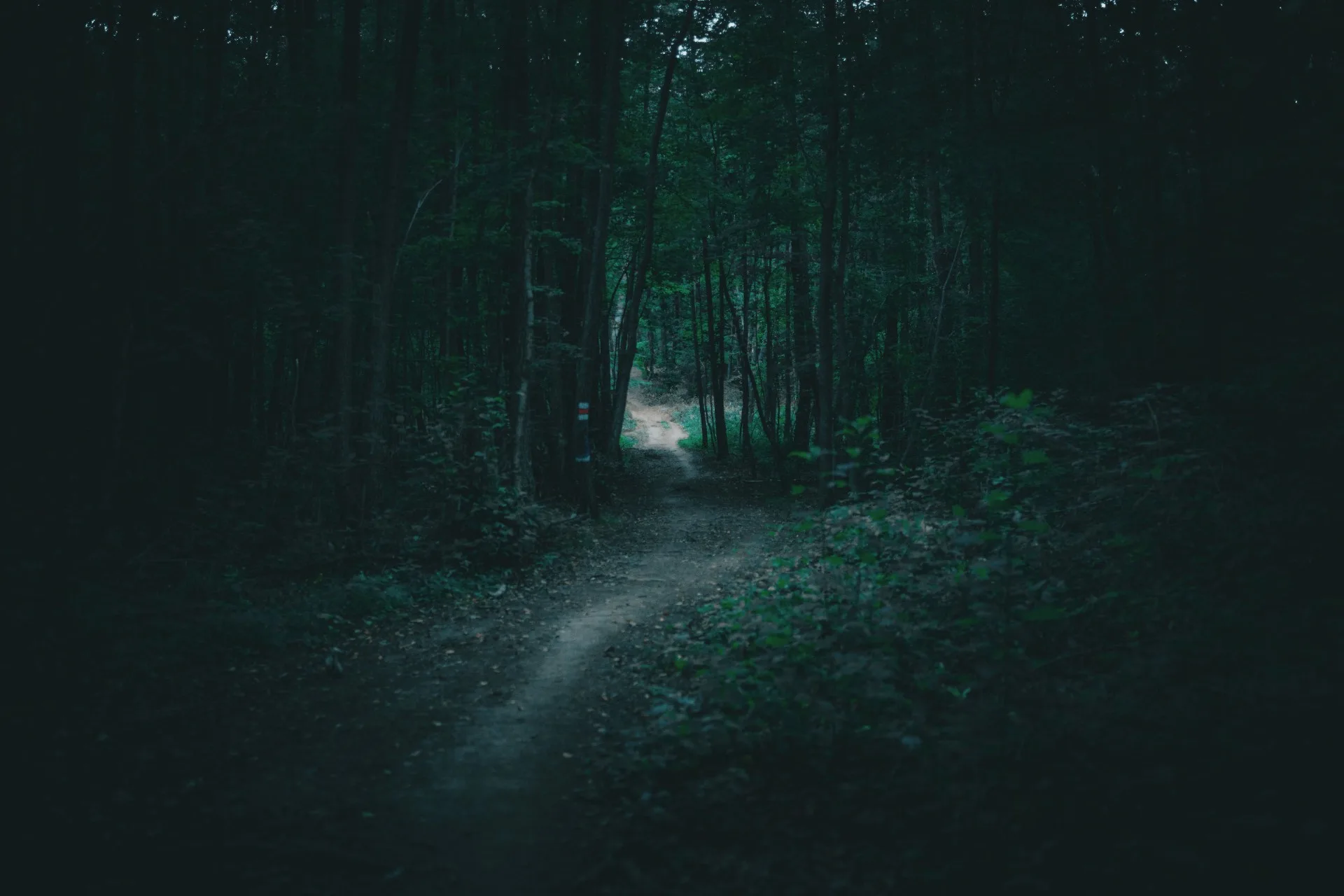
To tell someone with significant depression, “Nature is its own antidepressant. Just take a walk in the woods,” minimizes the scope and complexity of their burdens. We would not have our fictional characters do something so simple to address their own conflict. Hell no. Just as in real life, our characters need a deeper journey full of bloody battles to truly face their burdens, rather than just a walk in the woods.
Or, if they do just take a walk in the woods, it would be something like The Ritual from Adam Nevill, where we fight ancient beasts to prove our worth.
Or, if they do just take a walk in the woods, it’s with friends to go caving, where they’ll soon descend into a labyrinth of tunnels with subterranean beasts at their heels, such as in The Descent.
Or, if they do just take a walk in the woods, it’s to spend a night in an isolated cabin where reading a passage from that book in the basement summons demons who slaughter your friends, one by one, until you’re the last one standing. (As in too many horror examples to name just one!)
Oh, but you got this. Because though life is filled with horror, life is also filled with resiliency. Monsters are real, but sometimes we win. In that way, horror is hope.
Horror writers understand the hell we must travel through when we face the monsters of the heart. Mental health suffering is unavoidable, and facing it alone is terrifying. So we go together, hand in hand, straight into the heart of darkness and through the suffering, torturing our protagonists as creatively as possible, but also helping them rise to each occasion and fight back. I like to believe this means that in the real world, we can support each other as we suffer through the spectrum of pain that awaits all of us.
This illuminates that the stereotype that horror writers enjoy hurting others is wrong. At our best, we feel the hurt of others—or, just as likely, have faced our own intense challenges and developed compassion for those whose mental health is suffering. We take them by the hand with understanding and walk the dark path alongside them, two sets of footprints instead of one, so that we may live to write and love another day.
Footnotes:
- Rousseau, Danielle. “Using Horror as a Therapeutic Tool for Trauma and Trauma Disorders.” Danielle Rousseau | Boston University, 2024. https://sites.bu.edu/daniellerousseau/2024/08/09/using-horror-as-a-therapeutic-tool-for-trauma-and-trauma-disorders/.
- Scrivner, Coltan, Mathias Clasen, Jens Kjeldgaard-Christiansen, and John A Johnson. “Pandemic Practice: Horror Fans and Morbidly Curious Individuals Are More Psychologically Resilient during the COVID-19 Pandemic.” PubMed Central, September 15, 2020. https://pmc.ncbi.nlm.nih.gov/articles/PMC7492010/.
- Scrivner, Coltan. “Scaring Away Anxiety: Therapeutic Avenues for Horror Fiction to Enhance Treatment for Anxiety Symptoms.” ResearchGate, February 2021. https://www.researchgate.net/publication/349041068_Scaring_away_anxiety_Therapeutic_avenues_for_horror_fiction_to_enhance_treatment_for_anxiety_symptoms.